Sleep Health · 04 October 2025
What is the Difference Between Snoring and Sleep Apnoea?
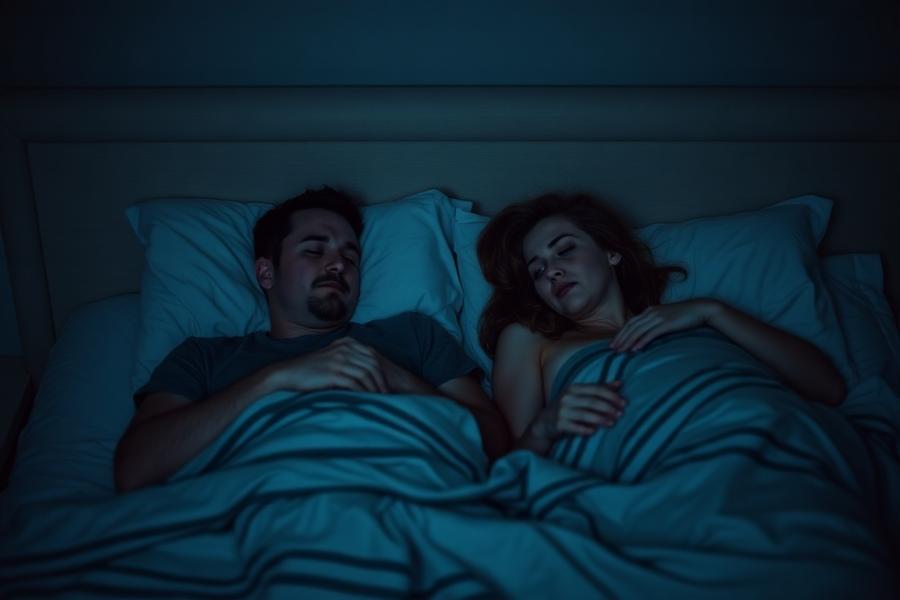
Snoring and sleep apnoea are commonly confused, and understandably so: they sound similar from the other side of the bed. But they are different conditions with very different health consequences.
Snoring is the sound of turbulent airflow vibrating soft tissue in the upper airway. It is extremely common, often harmless on its own, and can be caused by nasal congestion, sleeping position, alcohol or simple anatomy.
Obstructive sleep apnoea is a repeated, complete or partial collapse of the airway during sleep. Breathing stops — sometimes for ten seconds or more, sometimes dozens of times per hour — and oxygen levels drop until the brain briefly rouses you to reopen the airway. Most people have no memory of these arousals at all.
The warning signs that snoring may be something more: witnessed pauses in breathing, gasping or choking on waking, morning headaches, waking unrefreshed after a full night, and persistent daytime sleepiness. High blood pressure that resists treatment is another common flag.
Untreated sleep apnoea is associated with hypertension, cardiovascular disease, type 2 diabetes and a significantly increased risk of motor vehicle accidents. That is what makes the distinction worth taking seriously.
If any of this sounds familiar, speak with your GP about a sleep study. If you already have a diagnosis, our team can help you find a device and mask that suit the way you actually sleep — start with our short device quiz.