Travel · 15 November 2025
How to Travel With a CPAP Machine — A Complete Guide for Flying
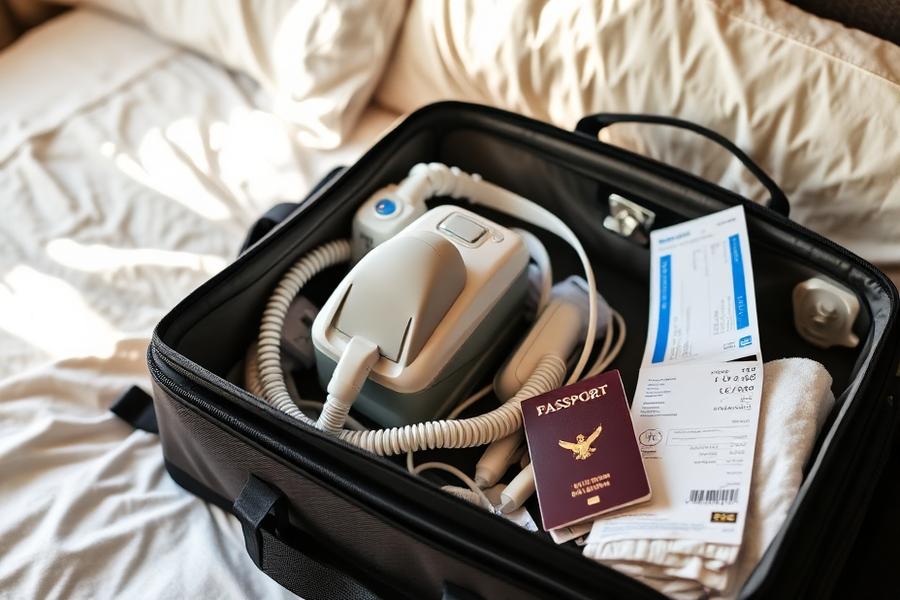
For many Australians who rely on CPAP therapy, the idea of travelling with a device feels daunting. Airlines, power adaptors, distilled water, security screening — it can feel like a lot to manage for what should be a relaxing trip. The good news is that CPAP machines are recognised medical devices, and with a little preparation, flying with yours is straightforward.
Your CPAP does not count as carry-on luggage on any Australian airline. Keep it in its travel bag, carry it into the cabin, and never check it in — checked baggage handling is the most common cause of damaged devices. Bring a copy of your prescription or a letter from your sleep clinician; it is rarely requested, but it removes any doubt at security screening.
At the security checkpoint, take the device out of its bag and place it in a separate tray, the same way you would a laptop. Leave the mask, tubing and power supply in the bag. If you would prefer the device is not run through the X-ray, you can request a visual inspection instead.
If you plan to use your CPAP in flight, contact the airline at least 48 hours before departure. Most carriers require an approved battery and a medical clearance form. Empty the humidifier chamber completely before you fly — cabin pressure changes can force water into the device.
At your destination, use distilled water where you can. If it is unavailable, cooled boiled water is an acceptable short-term substitute, and running the device without humidification for a few nights will not harm your therapy. Pack a universal travel adaptor and check the voltage rating on your power supply before you leave.
If you travel often, a dedicated travel device like the AirMini is worth considering. It weighs 300 grams, is approved for in-flight use, and uses waterless humidification — which means one less thing to manage at 35,000 feet.